THE WORLD COFFEE GUIDE
12 маршрутов. 3 города. Новый способ открыть каждый.
Самостоятельные прогулки соединяют выбранные кафе с рынками, кварталами, архитектурой и историческими местами. Для каждой достопримечательности есть рассказ с местным контекстом и источником.
12 маршрутов33 остановок на кофе72 остановок~32.6 km combined walking
Все маршруты · 12 маршрутов · Выберите город, чтобы увидеть все маршруты
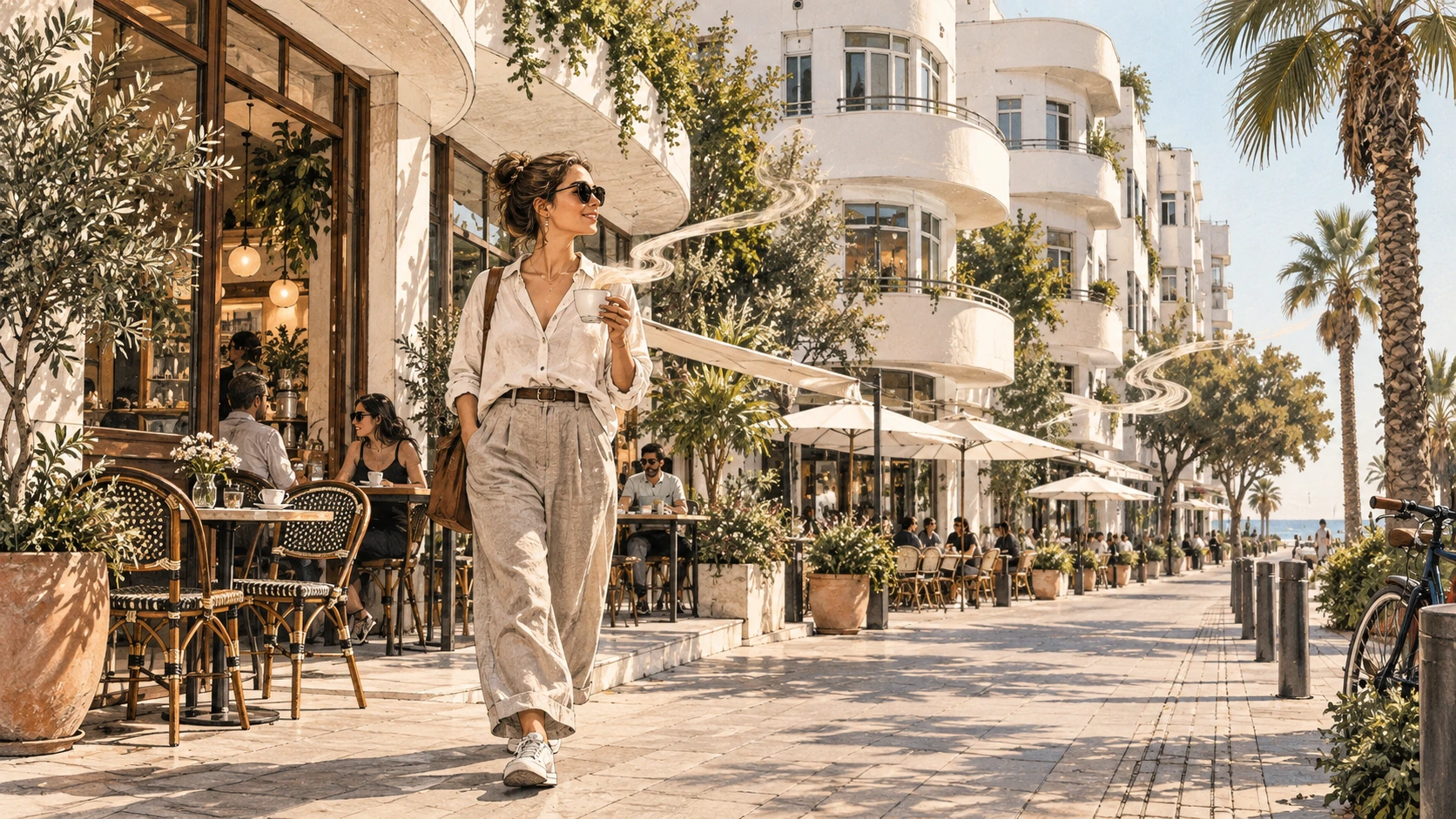 01АРХИТЕКТУРА И КОФЕ · Тель-Авив
Кофе и Белый город
Утро на площади Дизенгоф, затем улицы Белого города, кафе в центре и бульвар Ротшильд.
~3.1 km3–4 часа5 остановок2 cafésМАРШРУТ ОТКРЫТ
01Кофе и Белый город
Утро на площади Дизенгоф, затем улицы Белого города, кафе в центре и бульвар Ротшильд.
~3.1 km3–4 часа5 остановок2 cafés
Предложенная самостоятельная прогулка. Расстояния и время приблизительны, с остановками; вход внутрь зависит от часов, билетов и записи. На телефоне используйте пешеходную ссылку каждой остановки.
- 01Интересное место
Площадь Дизенгоф
История и культура этого места
Dizengoff Square is one of central Tel Aviv’s best-known public spaces, and its form reflects the city’s changing ideas about streets and gathering places. It began as an open street junction, was later raised above street level, and was eventually returned to the level of the surrounding streets. By the fountain, notice the curved façades and the way cafés and crossings connect the square to Dizengoff Street. It is a useful place to pause and see how a traffic space can also function as an urban living room. Walk around the edge and compare the calmer centre with the pace of the surrounding boulevard.
Источник и подробнее - 02Остановка на кофе
Nahat · Reines
Фильтр-кофе или эспрессо в уютном кафе-салоне
- 03Интересное место
Bialik Street
История и культура этого места
Bialik Square and its surrounding street form an unusual cluster of cultural houses within a short walk. Bialik House, the City Museum and Beit Liebling each tell a different part of the city’s story: Hebrew literature, municipal life and the architecture of the White City. The buildings are part of the visit themselves, so look at their façades, balconies and courtyards as well as the museum signs. Even when a venue is closed, the street can be read from the outside and linked with the small squares nearby. Check each institution’s hours and ticket information before planning an indoor visit.
Источник и подробнее - 04Остановка на кофе
Nomena Roasters
Обжарка на месте и остановка для настоящего кофейного знакомства
- 05Интересное место
Rothschild Boulevard
История и культура этого места
Rothschild Boulevard took shape in Tel Aviv’s early years and gradually became a public axis linking historic streets with the city’s cultural centre. The municipality documents the boulevard’s beginnings and its naming after Baron Edmond de Rothschild; buildings along it also sit within the White City World Heritage area. As you walk, look for recurring details—balconies, windows, shading and rooflines—and notice how each building meets the tree-lined promenade. The boulevard is an everyday place for sitting, walking and cycling, as well as an architectural route. If time allows, continue south toward Neve Tzedek and watch the urban fabric change.
Источник и подробнее
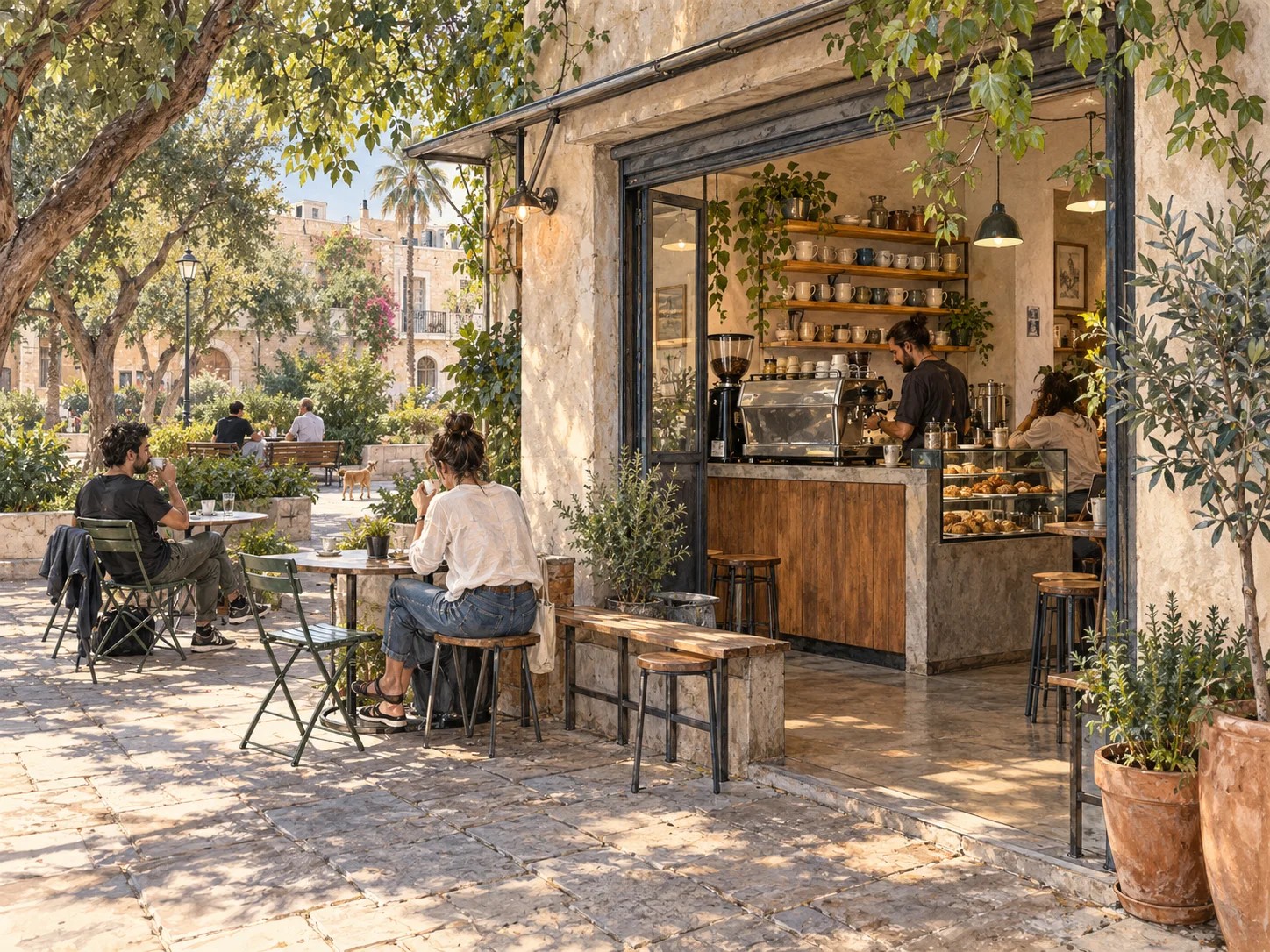 02ИСТОРИЯ И РАЙОНЫ · Тель-Авив
Яффо, Нога и море
Прогулка по разным слоям Яффо: Часовая башня, блошиный рынок, кофе и музыка, Нога и старая железнодорожная станция.
~3.0 kmОколо 3 часов7 остановок3 cafésОТКРЫТЬ МАРШРУТ
02Яффо, Нога и море
Прогулка по разным слоям Яффо: Часовая башня, блошиный рынок, кофе и музыка, Нога и старая железнодорожная станция.
~3.0 kmОколо 3 часов7 остановок3 cafés
Предложенная самостоятельная прогулка. Расстояния и время приблизительны, с остановками; вход внутрь зависит от часов, билетов и записи. На телефоне используйте пешеходную ссылку каждой остановки.
- 01Интересное место
Часовая башня Яффо
История и культура этого места
The Clock Tower stands at Jaffa’s historic entrance, marking the transition from newer streets toward the Old City and port. It was built in the Ottoman period, as part of a wider wave of clock towers erected in the region around the turn of the twentieth century. The square gathers Jaffa Road, Yefet Street and the lanes leading into the old quarter; it is a good place to understand Jaffa as a port city shaped by trade, government and movement. Look at the clocks and stone arches, then turn toward both the port and the market to see two sides of the city’s story. Cross carefully: the square remains an active traffic junction.
Источник и подробнее - 02Остановка на кофе
Ada Hanina
Кофе, винил и характер Яффо
- 03Интересное место
Блошиный рынок Яффо
История и культура этого места
Jaffa Flea Market is a long-standing commercial area beside the Old City, where antiques, second-hand goods, design, food and small shops now sit side by side. Step into the side streets rather than staying only on the main strip; they reveal the shift between traditional trade and newer creative businesses. Some shops focus on used objects, household goods and furniture, while others present galleries and local fashion. The market changes with the day and hour, so a morning visit feels different from an evening one. If an object catches your eye, ask the seller about its provenance—the conversation is part of the place’s character.
Источник и подробнее - 04Остановка на кофе
Cafelix · Jaffa
Выразительный эспрессо на площади Сегула
- 05Интересное место
Исторический вокзал Яффо
История и культура этого места
Jaffa’s historic railway station is tied to the beginning of the Jaffa–Jerusalem line: the first train reached Jerusalem in 1892, and this station was the line’s starting point. After years of decline, the station buildings and tracks were conserved and the complex reopened as a public destination. In the courtyard, notice the scale of a terminal station, the stone structures and the historic link between the port and the journey to Jerusalem. Today the site hosts food, retail and events, but it is worth pausing for the remaining traces of the old transport hub. Check ahead for exhibitions or special activities during your visit.
Источник и подробнее - 06Остановка на кофе
Nahat · HaTachana
Кофе на историческом вокзале Яффо, открытом в 1892 году на линии в Иерусалим. Найдите сохранённые здания и пути.
- 07Интересное место
Сузан Далаль и Неве-Цедек
История и культура этого места
Suzanne Dellal Centre occupies a historic school compound in Neve Tzedek, adapted into a dance and cultural centre in the late 1980s. The transformation keeps the courtyards and buildings active parts of the site rather than mere scenery. From outside, notice the stone arches, courtyards and connections between the structures; performances and events take place indoors according to the programme. Neve Tzedek around it was among the earliest neighbourhoods built beyond Jaffa, with lanes, stone houses and small businesses. Pair a quiet walk through the neighbourhood with a check of the performance calendar, since entry depends on event times and tickets.
Источник и подробнее
 03РЫНОК, СТРИТ-АРТ И КОФЕ · Тель-Авив
Рынок Кармель и Флорентин
Три остановки на кофе, Йеменский квартал, рынки Кармель и Левински, парк ха-Месила и двор Kiosko во Флорентине.
~2.8 km2,5–3 часа7 остановок3 cafésОТКРЫТЬ МАРШРУТ
Рынок Кармель и Флорентин
Три остановки на кофе, Йеменский квартал, рынки Кармель и Левински, парк ха-Месила и двор Kiosko во Флорентине.
~2.8 km2,5–3 часа7 остановок3 cafés
Предложенная самостоятельная прогулка. Расстояния и время приблизительны, с остановками; вход внутрь зависит от часов, билетов и записи. На телефоне используйте пешеходную ссылку каждой остановки.
- 01Остановка на кофе
Coffee at the Market
Давняя обжарочная мастерская и дегустация эспрессо у входа на рынок
- 02Интересное место
Йеменский квартал
История и культура этого места
Kerem HaTeimanim developed in the early twentieth century as a residential neighbourhood for Yemenite immigrants, close to Carmel Market and the central commercial streets. Its narrow lanes and low houses retain a neighbourhood scale even as the surrounding area has become busier and more visitor-oriented. Notice the courtyards, doorways and small passages connecting the streets; they speak of a place built for everyday life rather than as a display. Yemenite traditions remain visible in food and long-standing businesses alongside newer eateries. Keep noise low and respect residents: this is still an active residential area.
Источник и подробнее - 03Интересное место
Рынок Кармель
История и культура этого места
Carmel Market is a central street market linking Allenby Street with Kerem HaTeimanim and Gan HaKovshim. Produce, spices, food, clothing and household goods form a dense commercial corridor where shopping and eating on the street are part of the experience. Visit in the morning to see the market at work, and slow down near its edges to notice how stalls give way to shops and side lanes. The municipality describes its broad mix of goods and its location between the northern square and Gan HaKovshim to the south. The market can be busy, so keep to the side, leave room for shoppers and carts, and check opening times before setting out.
Источник и подробнее - 04Остановка на кофе
Caffe Tamati
Небольшая кофейная стойка с акцентом на эспрессо внутри рынка
- 05Интересное место
Парк ха-Месила
История и культура этого места
HaMesila Park reuses the historic Jaffa–Jerusalem railway corridor as a public walking and cycling route in south Tel Aviv. Instead of remaining behind a fence, the former rail line links neighbourhoods, streets and leisure spaces, making the connection between Jaffa and Tel Aviv legible on the ground. Along the way, notice the changing urban fabric and the meeting of conserved buildings, new commerce and open space. It is a good place for a short shaded pause, but the path is shared with cyclists and other walkers. Parts of the park and surrounding district continue to change, so routes and works may be updated.
Источник и подробнее - 06Интересное место
Рынок Левински
История и культура этого места
Levinsky Market is a commercial street that grew into a food market known for spices, delicatessens and south Tel Aviv’s everyday commerce. The street was laid out in the 1920s as part of the Neve Sha’anan neighbourhood, whose plan gives Levinsky a distinctive central role. Today the shops range from spices and dried fruit to bakeries, cheeses and local cuisines, alongside places to eat that stay open into the evening. Slow down and read the signs and shop windows; many tell stories of families and culinary traditions brought here from different places. Come hungry, but leave time to walk the neighbouring streets as well.
Источник и подробнее - 07Остановка на кофе
Kiosko
В завершение — кофе и соседский двор на Йедидья Френкель, 31. Эспрессо, небольшой перекус или отдых после рынков.
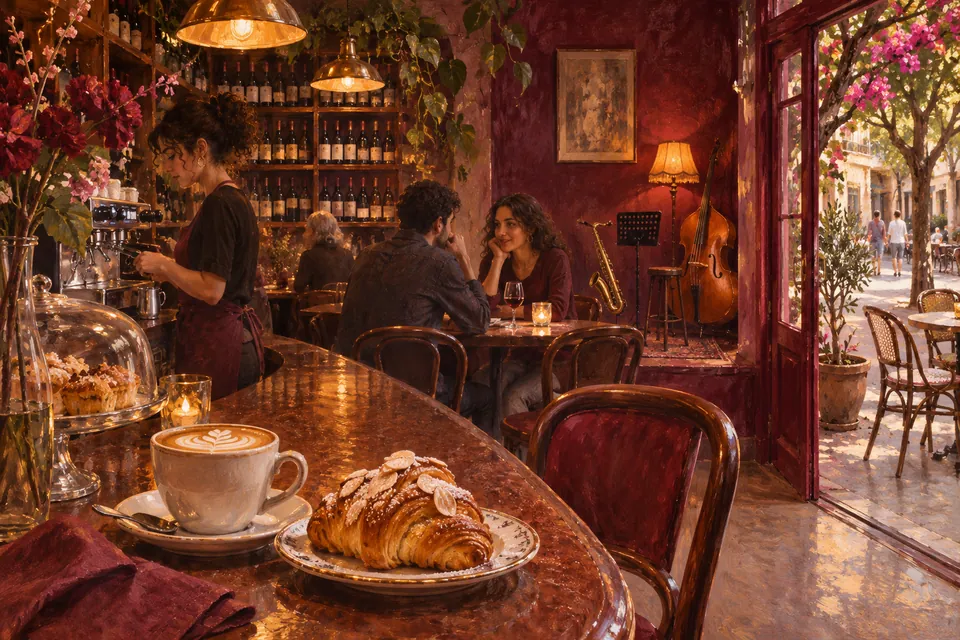 04РАЙОН, АРХЕОЛОГИЯ И КОФЕ · Тель-Авив
Базель, винный пресс и площадь ха-Медина
От улиц Базель через древний винный пресс к площади ха-Медина, с кофе и выпечкой.
~2.2 kmОколо 2–3 часов6 остановок3 cafésОТКРЫТЬ МАРШРУТ
04Базель, винный пресс и площадь ха-Медина
От улиц Базель через древний винный пресс к площади ха-Медина, с кофе и выпечкой.
~2.2 kmОколо 2–3 часов6 остановок3 cafés
Предложенная самостоятельная прогулка. Расстояния и время приблизительны, с остановками; вход внутрь зависит от часов, билетов и записи. На телефоне используйте пешеходную ссылку каждой остановки.
- 01
- 02Интересное место
Площадь Базель
История и культура этого места
Basel Square works as a small neighbourhood space within an active commercial district rather than as a grand ceremonial plaza. The surrounding cafés and shops make it a natural meeting point, while the streets leading from it connect walking, shopping and outdoor seating. The municipality promotes pedestrian links in the area, including a connection between Astori HaParhi Street and the square; notice the continuity of the pavements and how local movement gathers around businesses. It is a good place to pause and watch everyday life in the Old North. Keep walkways clear: the square is compact and shared by people passing through and people sitting outside.
Источник и подробнее - 03Остановка на кофе
Cafe Castel
Районная кофейная остановка на Ибн-Гвироль, 151
- 04Интересное место
Сад Гат
История и культура этого места
Gan HaGat is a small green pocket with a rare archaeological trace within the urban fabric: an ancient wine press cut or built into the local kurkar sandstone. A survey by the Tel Aviv municipality and the Society for the Protection of Nature notes that the press is well preserved, beside a kurkar wall and a nearby path. Approach slowly and look at the ground and edges of the garden; this is not a large museum site, and its value lies in the meeting of history, geology and urban nature. The greenery offers a quiet pause between streets. Avoid stepping on the remains or moving stones, and leave the site as you found it.
Источник и подробнее - 05Интересное место
Площадь ха-Медина
История и культура этого места
Kikar HaMedina is a broad, circular urban space surrounded by a ring of streets and buildings. Its planning history and the city’s planning discussions around it offer a way to see how an open space becomes a landmark within a northern residential district. Walk part of the perimeter and notice the scale of the surrounding buildings and the relationship between their façades and the open centre. As the square and its surroundings continue to change, read what is actually open on the day rather than assuming every part has the same access or layout. A short pause here makes a pleasant contrast with the smaller streets and cafés on this route.
Источник и подробнее - 06Остановка на кофе
OPEN · Kikar HaMedina
Кофе и сэндвич на кольце площади в завершение
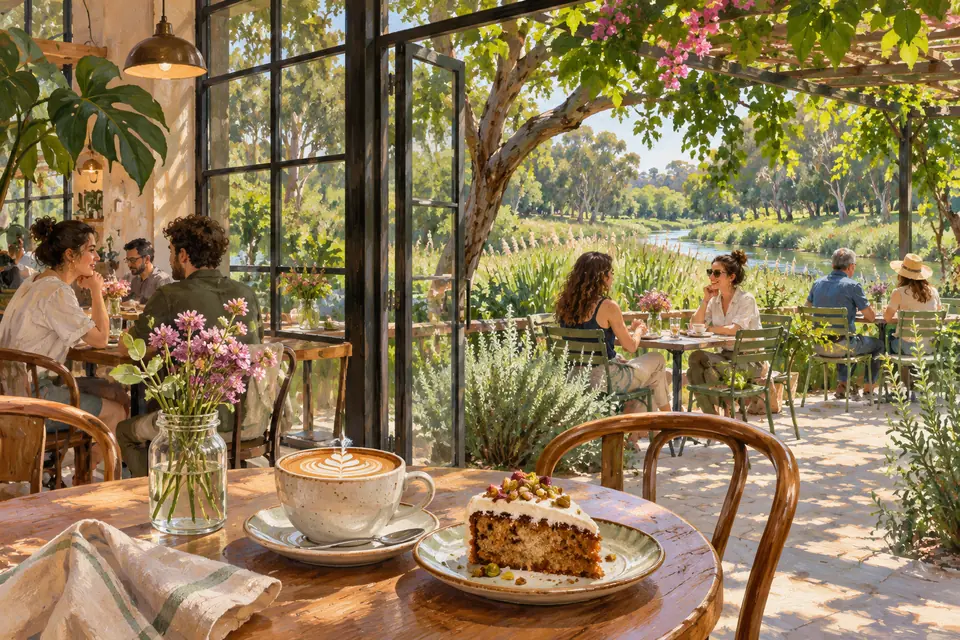 05ГОРОДСКАЯ ПРИРОДА И КОФЕ · Тель-Авив
Бавли, птицы и мельницы Яркона
От районного кафе Бавли к речным дорожкам, наблюдению за птицами и Семи мельницам.
~2.8 kmОколо 3 часов5 остановок2 cafésОТКРЫТЬ МАРШРУТ
05Бавли, птицы и мельницы Яркона
От районного кафе Бавли к речным дорожкам, наблюдению за птицами и Семи мельницам.
~2.8 kmОколо 3 часов5 остановок2 cafés
Предложенная самостоятельная прогулка. Расстояния и время приблизительны, с остановками; вход внутрь зависит от часов, билетов и записи. На телефоне используйте пешеходную ссылку каждой остановки.
- 01
- 02Интересное место
Берег Яркона и мост Бавли
История и культура этого места
The Yarkon riverbank and Bavli Bridge mark a clear shift from urban streets to a corridor of water and open nature. Along the river, look for bank vegetation, open stretches and birdlife, and notice how the park works both as an ecological link and an everyday leisure space. The bridge offers a useful view of the meeting between river and neighbourhood, but walking a little farther beside the water makes the change of pace more tangible. This is a route for a quiet stroll, not for feeding or disturbing wildlife. Stay on the path, take rubbish with you and observe birds from a respectful distance.
Источник и подробнее - 03Остановка на кофе
HaPina HaYeruka · HaYarkon
Кофе и пирог на Роках, 80; уточните наличие мест
- 04Интересное место
Рош-Ципор
История и культура этого места
Rosh Tzipor is a natural area in Yarkon Park where visitors can slow down and observe birds and urban habitats. Open space and proximity to water attract different species through the year, so the experience changes with season and time of day. Stand quietly for a moment, listen and look for movement in the vegetation instead of rushing from point to point. It is also a small lesson in how nature can remain present within a dense metropolis. Bring binoculars if you have them, keep distance from birds, and avoid music or feeding. For a dedicated visit, check KKL’s current access and activity information.
Источник и подробнее - 05Интересное место
Семь мельниц
История и культура этого места
Seven Mills is a historic site on the Yarkon where flour mills once harnessed the river’s flow. The remains of the structures and passages offer a glimpse of local work and commerce before the area became an urban park. As you walk around, look for the stone bases and the relationship between the buildings and the channel; they help you imagine the mills without inventing details that are no longer visible. Today the site is a popular stop for walking, cycling and picnics, and the paths are shared by many visitors. Pair it with a river view and KKL’s further interpretation of the site.
Источник и подробнее
 06ИСКУССТВО, НАСЛЕДИЕ И СПЕШЕЛТИ-КОФЕ · Тель-Авив
Музей, Шауль ха-Мелех и Сарона
Два кофейных бара, архитектура музея и дома Сароны между культурным кварталом и парком.
~1.9 kmОколо 2–3 часов без посещения музея5 остановок2 cafésОТКРЫТЬ МАРШРУТ
06Музей, Шауль ха-Мелех и Сарона
Два кофейных бара, архитектура музея и дома Сароны между культурным кварталом и парком.
~1.9 kmОколо 2–3 часов без посещения музея5 остановок2 cafés
Предложенная самостоятельная прогулка. Расстояния и время приблизительны, с остановками; вход внутрь зависит от часов, билетов и записи. На телефоне используйте пешеходную ссылку каждой остановки.
- 01Остановка на кофе
Shaula
Эспрессо из зёрен Blooms на Шауль ха-Мелех, 39
- 02Интересное место
Тель-Авивский музей искусств
История и культура этого места
The Amir Building is one of the Tel Aviv Museum of Art’s most distinctive architectural additions, designed to expand the visitor experience as well as the exhibition space. Its layout divides the visit into galleries and passages, so notice how natural light, angles and transitions guide movement between rooms. Even from outside, the façade can be read in relation to the street and nearby plaza. The museum presents changing exhibitions, so the content varies from visit to visit. Check opening hours, admission and current exhibitions on the museum’s site before planning an indoor stop.
Источник и подробнее - 03Интересное место
Исторические дома Сароны
История и культура этого места
Sarona began as a nineteenth-century settlement of German Templers, and the surviving buildings tell a story of settlement, agriculture and urban change. Stone houses, roofs and courtyards have been conserved and reused; today they host commerce, culture and offices alongside public space. Notice the contrast between the low historic buildings and the business towers around them—it is part of Sarona’s present-day character. Walking between the structures shows how a historic layer can remain visible within a growing city centre. Access to individual buildings depends on the opening hours of the business or institution inside.
Источник и подробнее - 04Остановка на кофе
MAE · Sarona
Спешелти-остановка в парке на Давид Элазар, 17
- 05Интересное место
Сарона Маркет
История и культура этого места
Sarona Market is a covered food destination within the Sarona district, with food shops, stalls and seating that combine shopping with dining. Its official site describes the renewal of the complex and the range of vendors and cuisines; in one place visitors can move between baked goods, produce, cheeses, spices and coffee. It is an active urban venue, so decide whether you are stopping for a quick taste or a longer meal, especially at weekends and busy hours. After coffee, return to the historic colony houses and gardens outside the market to connect Sarona’s present-day food culture with its past. Check opening hours and vendor information on the market’s site.
Источник и подробнее
 07PORT, NEIGHBOURHOOD & COFFEE · Хайфа
Downtown, Wadi Nisnas & the Gardens
From Derekh Yafo through Wadi Nisnas and the German Colony to a view of the Bahá’í Gardens.
~2.8 kmОколо 3 часов6 остановок3 cafésОТКРЫТЬ МАРШРУТ
07Downtown, Wadi Nisnas & the Gardens
From Derekh Yafo through Wadi Nisnas and the German Colony to a view of the Bahá’í Gardens.
~2.8 kmОколо 3 часов6 остановок3 cafés
Предложенная самостоятельная прогулка. Расстояния и время приблизительны, с остановками; вход внутрь зависит от часов, билетов и записи. На телефоне используйте пешеходную ссылку каждой остановки.
- 01Остановка на кофе
Naima
Begin with specialty coffee and local roasting on Derekh Yafo.
- 02Интересное место
Wadi Nisnas market and neighbourhood
История и культура этого места
Wadi Nisnas developed in the nineteenth century as a working-class neighbourhood and has retained a Mediterranean street fabric of lanes and stone houses. Its small market operates through the year, bringing together produce, bakeries, stalls and local cuisines. Nearby are cultural and religious institutions serving different communities, including Beit HaGefen, a Jewish-Arab cultural centre. Since 1993, the December “Holiday of Holidays” festival has highlighted Haifa’s multicultural character. As you walk, notice the meeting of everyday commerce, places of worship and homes: this is a living neighbourhood, not a market set.
Источник и подробнее - 03Остановка на кофе
Coffee Mustafa
Coffee and hospitality in the heart of Wadi Nisnas.
- 04Интересное место
German Colony & Ben-Gurion Boulevard
История и культура этого места
The colony was founded in 1868 by German Templers and was the first settlement in the region during that wave of Templer migration. Some houses were restored in the 1990s; today the main boulevard brings together heritage, cafés, businesses and tourism. Look at the stone details and rooflines, then notice how the street opens toward the slopes and gardens. Ben-Gurion Boulevard remains an everyday urban route, so it shows the meeting of local life and international visitors. It is a useful place to consider how new uses can bring historic buildings back to life without erasing their earlier layer.
Источник и подробнее - 05Интересное место
View of the Bahá’í Gardens
История и культура этого места
The Bahá’í Gardens climb the Carmel in 19 terraces, centred on the Shrine of the Báb. From the public area in the German Colony, visitors get a clear view of the symmetrical axis and its connection between mountain, city and bay. Notice the stepped lines, vegetation and the way the gardens link Carmel to Ben-Gurion Boulevard. This is an active sacred site, so quiet and respect for visitor rules matter. A street-side view is different from a visit inside the gardens; entry is subject to the official hours, route and guidance.
Источник и подробнее - 06Остановка на кофе
Café Palmer
Finish with coffee in a historic downtown building.
 08MARKET, ART & HISTORY · Хайфа
Talpiot Market, Hadar & Creative Haifa
Coffee at Talpiot Market, art spaces in Hadar and the story of the historic Technion building.
~2.4 kmОколо 3 часов6 остановок3 cafésОТКРЫТЬ МАРШРУТ
08Talpiot Market, Hadar & Creative Haifa
Coffee at Talpiot Market, art spaces in Hadar and the story of the historic Technion building.
~2.4 kmОколо 3 часов6 остановок3 cafés
Предложенная самостоятельная прогулка. Расстояния и время приблизительны, с остановками; вход внутрь зависит от часов, билетов и записи. На телефоне используйте пешеходную ссылку каждой остановки.
- 01Остановка на кофе
Talek
Start with specialty coffee at Talpiot Market.
- 02Интересное место
Talpiot Market
История и культура этого места
Talpiot Market began operating in the early 1940s, and its historic building is one of Hadar’s landmarks. Alongside produce stalls on the lower level and nearby streets, the district has renewed itself with bakeries, restaurants, bookshops, art spaces and small businesses. This change has added food and culture without removing everyday trade. Notice the colourful basketball court, passages and façades around the market. Walk along Sirkin Street as well as through the building; there you can see how the market extends into the neighbourhood.
Источник и подробнее - 03Остановка на кофе
Sally Bakery
Pastries and coffee on Omar Al-Khattab Street, within the market area.
- 04Интересное место
Pyramida & Wadi Salib
История и культура этого места
Pyramida Contemporary Art Centre sits in Wadi Salib, a neighbourhood marked by deep social and urban change. The building has had several uses; after a period of neglect it became a workspace and exhibition venue for artists, and restoration in the last decade brought it back into cultural use. From outside, notice its industrial form and the contrast with the historic streets around it. The site shows how art can reactivate a building and open a conversation about memory, development and belonging. Check the local tourism site for current exhibitions or events before planning an indoor visit.
Источник и подробнее - 05Остановка на кофе
Tsafon Roasters
A coffee stop at a Hadar roastery.
- 06Интересное место
Madatech & the old Technion building
История и культура этого места
The historic Technion building in Hadar is tied to the early history of scientific and technical education in the country. Its cornerstone was laid in 1912, but the First World War and a dispute over the language of instruction delayed the opening; classes finally began in 1924. The building also served as a military hospital during the war and was later adapted into a science museum. Outside, look for the early twentieth-century civic architecture; inside, the visit moves from history to interactive exhibitions. Museum entry and exhibitions depend on opening hours and tickets.
Источник и подробнее
 09COFFEE, GARDENS & VIEWS · Хайфа
Carmel Center, Gan HaEm & Views
Three coffee stops between Gan HaEm, Louis Promenade and Carmel viewpoints.
~2.6 km2,5–3 часа5 остановок3 cafésОТКРЫТЬ МАРШРУТ
09Carmel Center, Gan HaEm & Views
Three coffee stops between Gan HaEm, Louis Promenade and Carmel viewpoints.
~2.6 km2,5–3 часа5 остановок3 cafés
Предложенная самостоятельная прогулка. Расстояния и время приблизительны, с остановками; вход внутрь зависит от часов, билетов и записи. На телефоне используйте пешеходную ссылку каждой остановки.
- 01Остановка на кофе
Café Shchenim
A community café to begin near Carmel Center.
- 02Интересное место
Gan HaEm
История и культура этого места
Gan HaEm is a public garden in Carmel Center with a broad lawn and the Shell Stage, used for public performances, events and concerts. Its location near the Carmelit and the zoo makes it a natural meeting point for transport, leisure and urban nature. Notice the shift from the commercial boulevard to the open garden, and how the stage changes the character of the space on event days. It is a good place for a short rest before continuing uphill or along the Carmel. If you are visiting for a performance, check the city’s current programme and entry guidance.
Источник и подробнее - 03Остановка на кофе
Caféin
Coffee and pastries in Carmel Center, a short walk from the garden.
- 04Интересное место
Louis Promenade
История и культура этого места
Louis Promenade runs along Yefe Nof and offers broad views over Haifa Bay, the port and, on clear days, the Galilee. The route includes vegetation, lawns, benches and quieter corners, so it is worth stopping at more than one viewpoint. From here the shape of Haifa becomes clear: mountain, slopes, downtown and sea share a single visual axis. Look into the gardens and Mediterranean woodland as well as toward the water. The promenade is open to visitors, but some sections are exposed to sun, so bring water and plan for the weather.
Источник и подробнее - 05Остановка на кофе
Birdy Specialty Café
A third coffee stop on Moriah Avenue to finish at an easy pace.
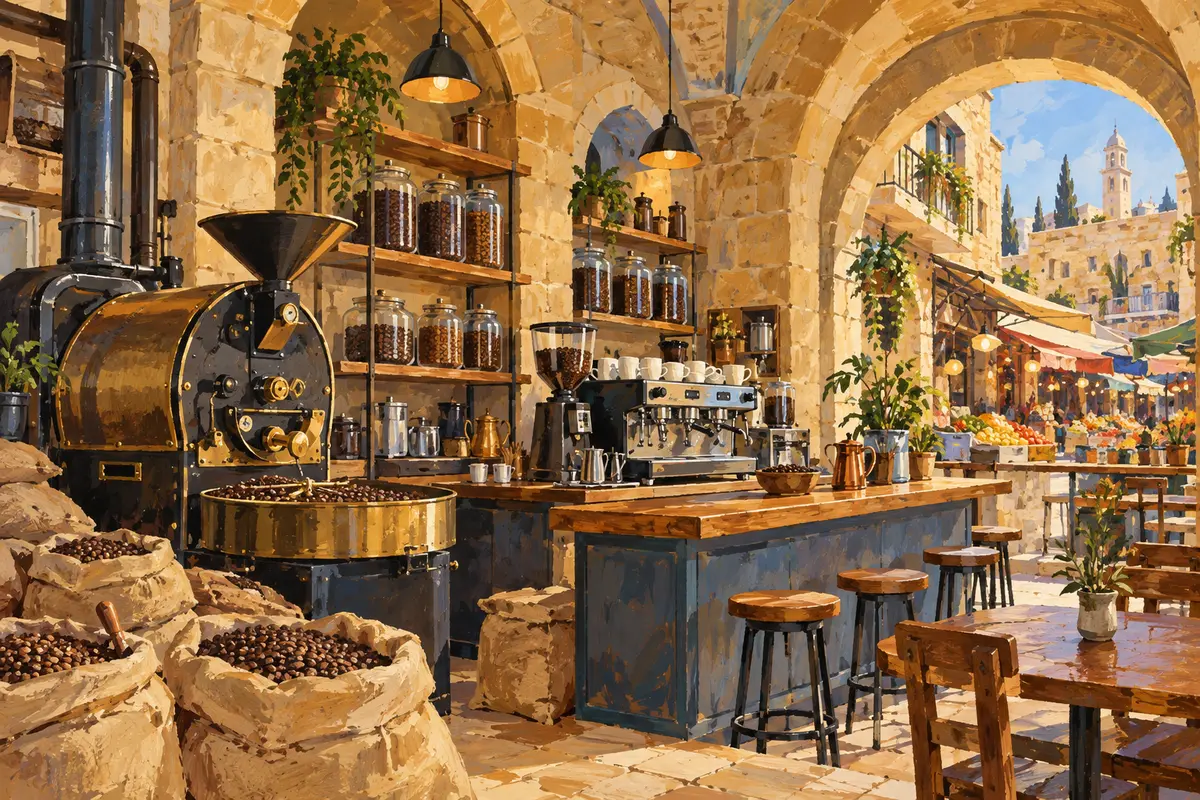 10MARKET, COMMUNITY & COFFEE · Иерусалим
Mahane Yehuda & the Lanes of Nachlaot
A working market, neighbourhood lanes and three café stops around Mahane Yehuda and Nachlaot.
~2.2 kmОколо 3 часов6 остановок3 cafésОТКРЫТЬ МАРШРУТ
10Mahane Yehuda & the Lanes of Nachlaot
A working market, neighbourhood lanes and three café stops around Mahane Yehuda and Nachlaot.
~2.2 kmОколо 3 часов6 остановок3 cafés
Предложенная самостоятельная прогулка. Расстояния и время приблизительны, с остановками; вход внутрь зависит от часов, билетов и записи. На телефоне используйте пешеходную ссылку каждой остановки.
- 01Остановка на кофе
Elijah’s Coffee
Begin with coffee on Shilo Street, between Nachlaot and the market.
- 02Интересное место
Mahane Yehuda Market
История и культура этого места
The market grew at the end of the Ottoman period on an open lot where farmers and residents brought produce to sell. Over time, permanent shops and market sections appeared, and the site expanded from one street into a network of lanes, stalls and stores. Today it remains an everyday market while also serving as a centre for food, cafés and evening life. Notice the differences between market streets, the kinds of goods on display and the merchants’ calls; these are part of the place, not just a backdrop. Visit at a time that suits you, and remember that some businesses close on Shabbat or change their hours by day.
Источник и подробнее - 03Остановка на кофе
Roasters · Mahane Yehuda
Coffee and roasting near the market.
- 04Интересное место
The lanes of Nachlaot
История и культура этого места
Nachlaot is a collective name for a group of neighbourhoods built beyond the Old City walls, mainly from the nineteenth century onward. Rather than one uniform plan, the area grew through small courtyards, synagogues, stone homes and lanes shaped by different communities and institutions. Notice how quickly the feeling changes between a main street and an inner lane. Doorways, courtyards and signs offer traces of close-knit community life alongside contemporary homes. This is an active residential area, so keep noise low and do not enter private courtyards without an invitation.
Источник и подробнее - 05Интересное место
Courtyards and sub-neighbourhoods of Nachlaot
История и культура этого места
Nachlaot’s courtyards show how Jerusalem expanded beyond the walls through small community initiatives as well as central planning. Each cluster of homes has its own scale, and a shared courtyard may link several entrances, a synagogue and a neighbourhood space. Look for visible details—stone steps, arches, railings and doors—but remember that these homes are occupied. You do not need to enter to understand the layout; read it from the street and respect residents’ privacy. This is a good place to slow down after the market and see everyday Jerusalem at close range.
Источник и подробнее - 06Остановка на кофе
Shuk Kaffe
A third coffee stop before returning to the market and main streets.
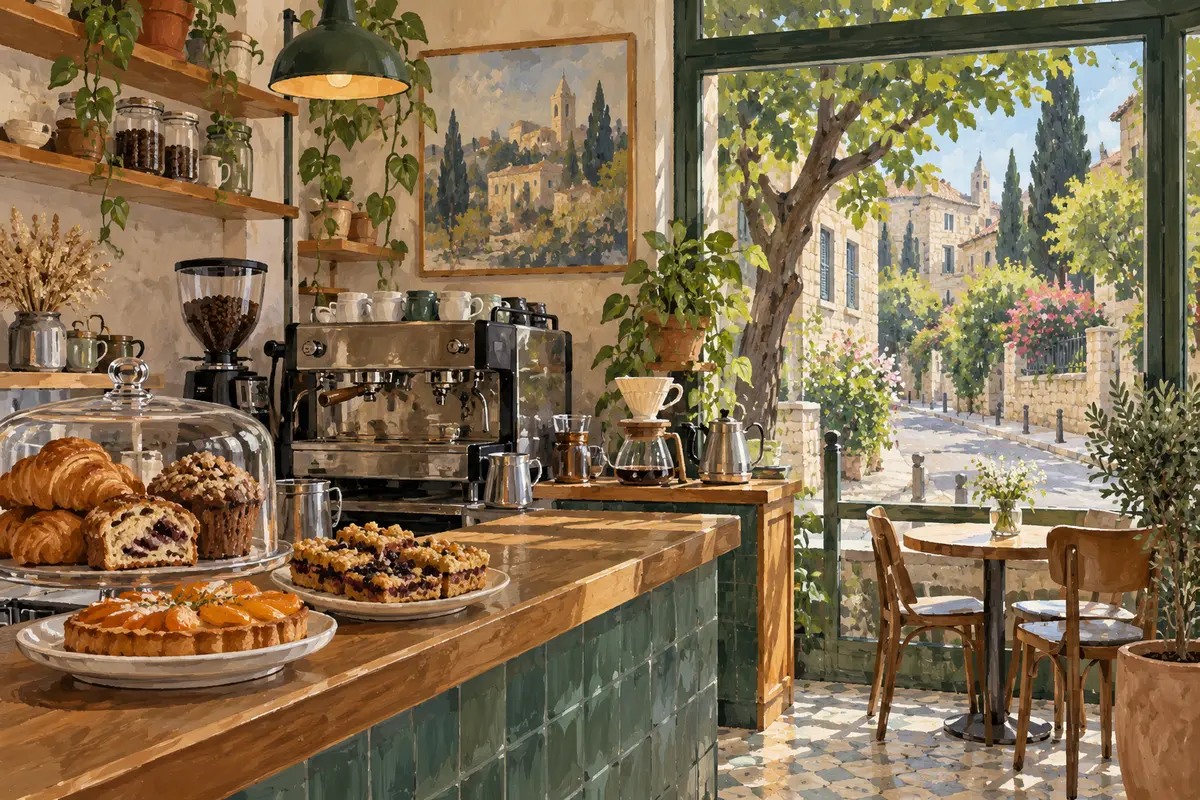 11NEIGHBOURHOODS, RAIL & COFFEE · Иерусалим
Rehavia, the German Colony & Baka
From Rehavia’s streets to Templer houses, the First Station and Baka.
~4.1 km3.5–4 hours7 остановок3 cafésОТКРЫТЬ МАРШРУТ
11Rehavia, the German Colony & Baka
From Rehavia’s streets to Templer houses, the First Station and Baka.
~4.1 km3.5–4 hours7 остановок3 cafés
Предложенная самостоятельная прогулка. Расстояния и время приблизительны, с остановками; вход внутрь зависит от часов, билетов и записи. На телефоне используйте пешеходную ссылку каждой остановки.
- 01Остановка на кофе
Sybaris Specialty Coffee
Begin the walk in Rehavia with specialty coffee on Azza Street.
- 02Интересное место
Hansen House
История и культура этого места
Hansen House was built in 1887 by Jerusalem’s Protestant community as an isolation and treatment institution for people with leprosy. Architect Conrad Schick designed the compound, which then stood outside the city centre and reflected the social separation surrounding the disease. After serving as a government hospital and closing in 2000, it was conserved and transformed into a centre for culture, design and media. The historical exhibition introduces the patients’ stories and changing attitudes toward the disease, alongside contemporary exhibitions and activity. Leave time for the stone buildings and courtyards, and check which spaces are open that day.
Источник и подробнее - 03Остановка на кофе
Coffee Mill
A café stop in the German Colony, with single-origin coffees and blends.
- 04Интересное место
German Colony & Emek Refaim
История и культура этого места
The German Colony was founded in 1873 by the Templers, and Emek Refaim became its main street. Stone houses and courtyards reflect nineteenth-century communal planning, while today’s cafés and shops give the street a new everyday rhythm. Look for stone inscriptions, tiled roofs and small gardens between the houses. The street connects neighbourhoods from the First Station toward Baka, making it both a passage and a destination. The area becomes livelier in the evening, but the historic proportions remain visible along the route.
Источник и подробнее - 05Интересное место
The First Station
История и культура этого места
The original railway station opened in 1892 with the arrival of the first train from Jaffa and served as an important link between Jerusalem and the coast for more than a century. Its stone building drew on European and Templer architectural elements, and it remained a central station until the line closed in 1998. After years of neglect, the site was restored and reopened in 2013 as a public complex for food, culture, sport and events. Look for original details and the way the tracks and buildings have been adapted to new uses. Check the programme if you want to visit an exhibition or event.
Источник и подробнее - 06Интересное место
Baka neighbourhood
История и культура этого места
Baka is a Jerusalem residential district where quiet streets, stone houses and courtyards sit alongside an active commercial road. Along Bethlehem Road and the side streets, older homes and newer uses form a relaxed neighbourhood fabric. Rather than focusing on one monument, notice the transitions between street sections, small gardens and the mix of homes, cafés and local businesses. The route arrives here from the German Colony and the First Station, showing how neighbouring districts connect in the city. Walk slowly and leave the pavements clear for residents.
Источник и подробнее - 07Остановка на кофе
Casa Lavi
Specialty coffee and light food on Bethlehem Road, to finish in Baka.
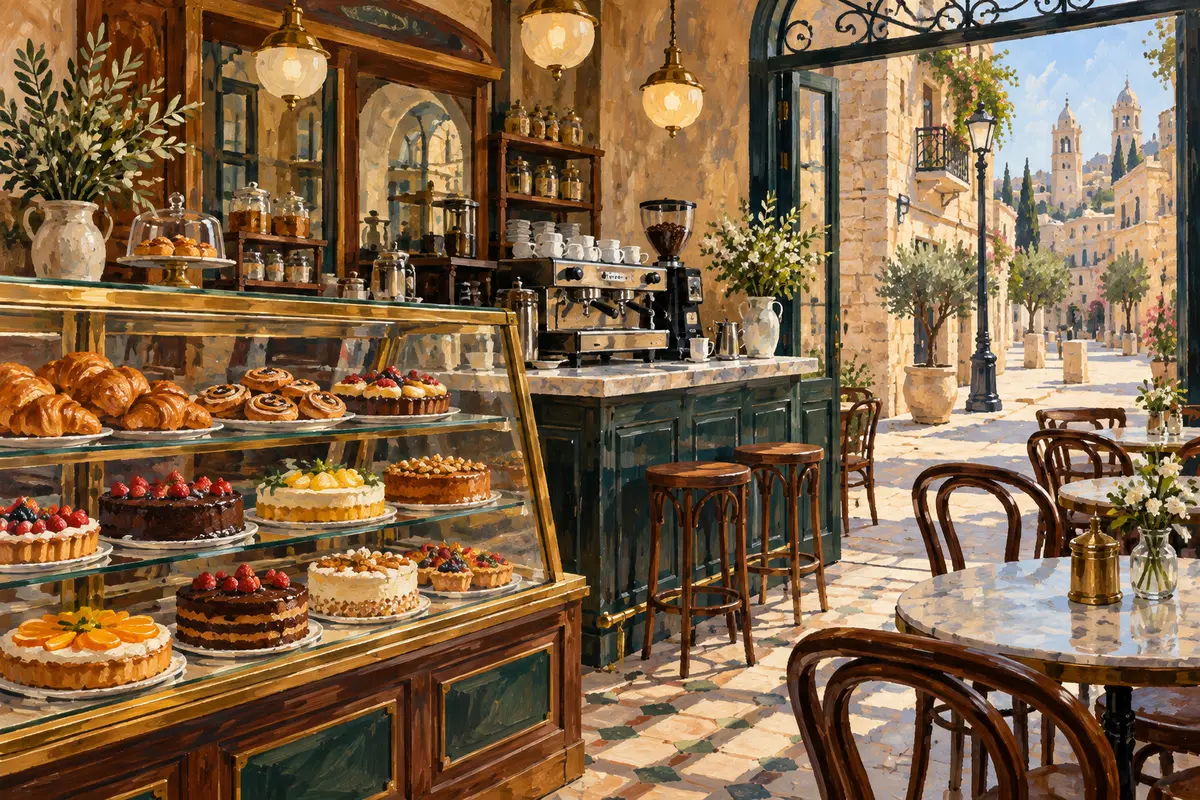 12OLD CITY & URBAN STORIES · Иерусалим
Jaffa Gate, the Citadel & City Centre
A historic house, a city gate, an ancient citadel and three café stops in central Jerusalem.
~2.7 kmОколо 3 часов7 остановок3 cafésОТКРЫТЬ МАРШРУТ
12Jaffa Gate, the Citadel & City Centre
A historic house, a city gate, an ancient citadel and three café stops in central Jerusalem.
~2.7 kmОколо 3 часов7 остановок3 cafés
Предложенная самостоятельная прогулка. Расстояния и время приблизительны, с остановками; вход внутрь зависит от часов, билетов и записи. На телефоне используйте пешеходную ссылку каждой остановки.
- 01Остановка на кофе
Café Kadosh
Start with coffee and pastry at a long-standing Jerusalem café in the city centre.
- 02Интересное место
Ticho House
История и культура этого места
Ticho House is one of the Jerusalem homes built beyond the Old City walls in the second half of the nineteenth century. In the early twentieth century, physician Avraham Ticho and artist Anna Ticho lived there; the house also became a meeting place for intellectuals and artists. Today it serves as an Israel Museum exhibition venue and preserves the connection between home, art and urban life. Before entering, look at the courtyard and façade and imagine the city’s then-new edge. Opening hours and exhibitions change, so check the official visitor information.
Источник и подробнее - 03Интересное место
Jaffa Gate
История и культура этого места
Jaffa Gate is one of the Old City gates and was built during the Ottoman period in the sixteenth century. It served as an important western entrance, and its position connects modern central Jerusalem, the citadel and the lanes inside the walls. Notice the narrow passage, stonework and shift in the feel of the street as you pass through. From the plaza you can continue to the ramparts walk or the Tower of David Museum, each with its own entry rules and hours. This is also a busy junction for residents and visitors, so pause to the side and keep the passage clear.
Источник и подробнее - 04Интересное место
Tower of David Citadel
История и культура этого места
The citadel beside Jaffa Gate contains layers of construction and archaeology from different periods, making it a useful starting point for reading Jerusalem’s complex history. The Tower of David Museum uses artefacts, buildings and exhibitions to tell the story of the city and its meaning across religious traditions. From the courtyards and moat, notice how the fortress served defence, government and observation. If you go inside, leave time for the exhibition rather than only the viewpoint; its route is organised around themes and periods. Hours, tickets and tours are updated on the museum site, and admission is paid.
Источник и подробнее - 05Остановка на кофе
Metaphora Art Café
Coffee and art in Feingold Courtyard, along Jaffa Street.
- 06Интересное место
Nahalat Shiva
История и культура этого места
Nahalat Shiva was founded in 1869 and is considered one of the first Jewish neighbourhoods built beyond Jerusalem’s Old City walls. Its name refers to the seven founders, and its lanes and courtyards reflect the city’s expansion from the crowded walled quarter into new neighbourhoods. Today stone houses share the streets with restaurants, shops and nightlife, while the smaller scale of the older buildings remains legible. Take one of the side streets rather than staying only in the central plaza, and notice how this historic space continues to serve the contemporary city. It remains an active neighbourhood, so be considerate of residents and businesses.
Источник и подробнее - 07Остановка на кофе
Tmol Shilshom
A literary café to finish among the stone houses and lanes of Nahalat Shiva.