Water is more than a pH number
The SCA’s technical explanation treats alkalinity as water’s resistance to a change in acidity; it is not the same as pH. Our editorial suggestion: before changing grind or dose because a cup seems different, record the water source, the filter-change date, and whether hardness and alkalinity were measured. The aim is not to turn a kitchen into a laboratory, but to stop treating every clear water as the same ingredient.
What the new research says — and what it does not
A 2026 sensory study found that, under its test conditions, bicarbonate had a clearer effect on the flavor profile than hardness alone. It used one Colombian coffee, so the authors caution against generalising to every roast and origin. Our modest practical conclusion: do not hunt for a magic mineral or buy a promise based on TDS alone. Measure or obtain alkalinity too, then compare under fixed brewing conditions.
With an espresso machine, the manual comes before the experiment
Breville notes that water guidance varies by model and local hardness, and directs owners to the machine manual, hardness setting and maintenance schedule. Do not move an online mineral recipe straight into a tank or plumbed machine. Check which water, filter and descaling procedure your model permits. This is operational guidance, not equipment testing we performed or a promise against scale or corrosion.
A simple two-water comparison at home
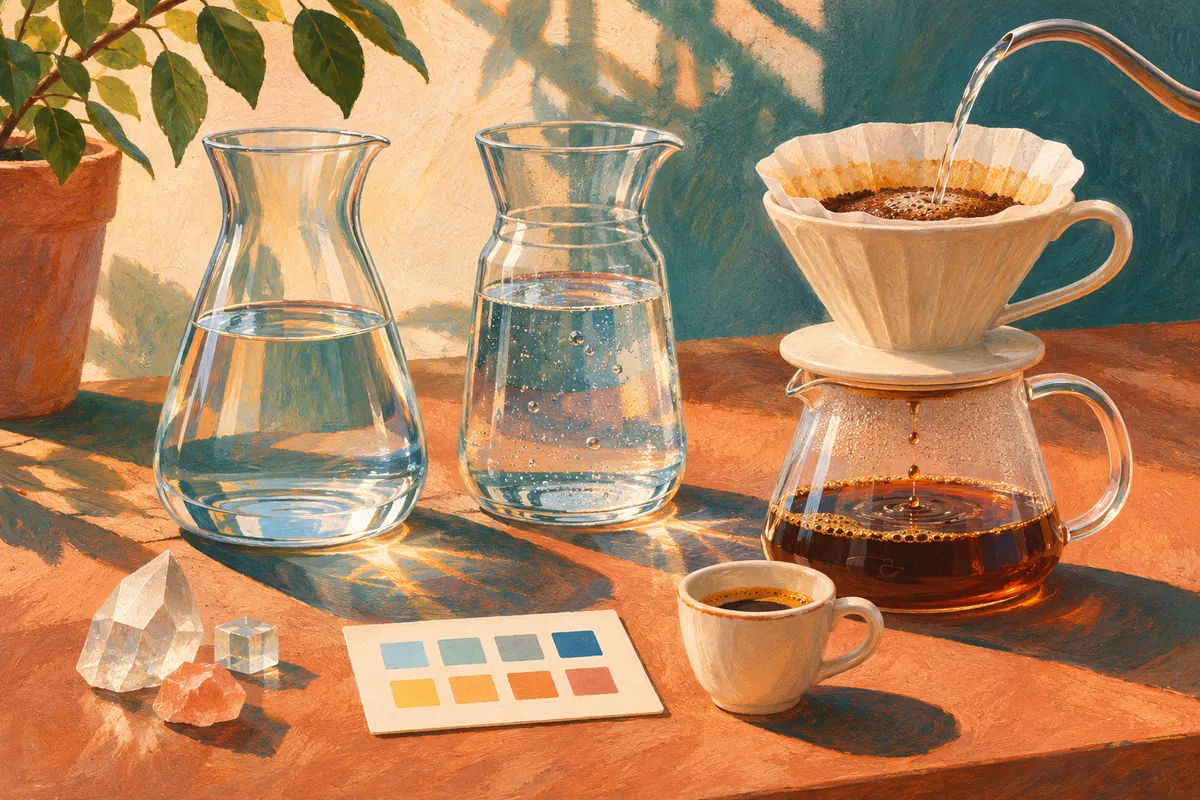
This is an editorial tasting exercise, not a laboratory experiment. Use filter or immersion brewing and two drinking waters you already know are suitable to drink. Keep beans, dose, grind, temperature, time and brewer identical. Label cups A and B, alternate the tasting order as the coffee cools slightly, and write only what you perceive: sharper or softer, fruitier, more bitter or flatter. Repeat on another day before deciding. If you do not know the water composition, the result shows which cup you preferred, not which mineral caused it.
For cafés: a small water log before grinder adjustment
Our recommendation for cafés: keep a short record of water source, filter model, replacement date, hardness result and, when available, alkalinity. When taste or flow changes, first check whether the water changed, then alter one recipe variable at a time. Keep maintenance notes separate from tasting notes; they answer different questions. The log is neither proof of quality nor a substitute for a technician or manufacturer instructions, but it can prevent recipe changes based on memory alone.