WORLD COFFEE GUIDE
THE WORLD COFFEE LEXICON
Understand every cup, from fruit to brew.
A visual guide to the terms, drinks, methods and decisions that shape flavor. We begin with 24 essentials and keep expanding.
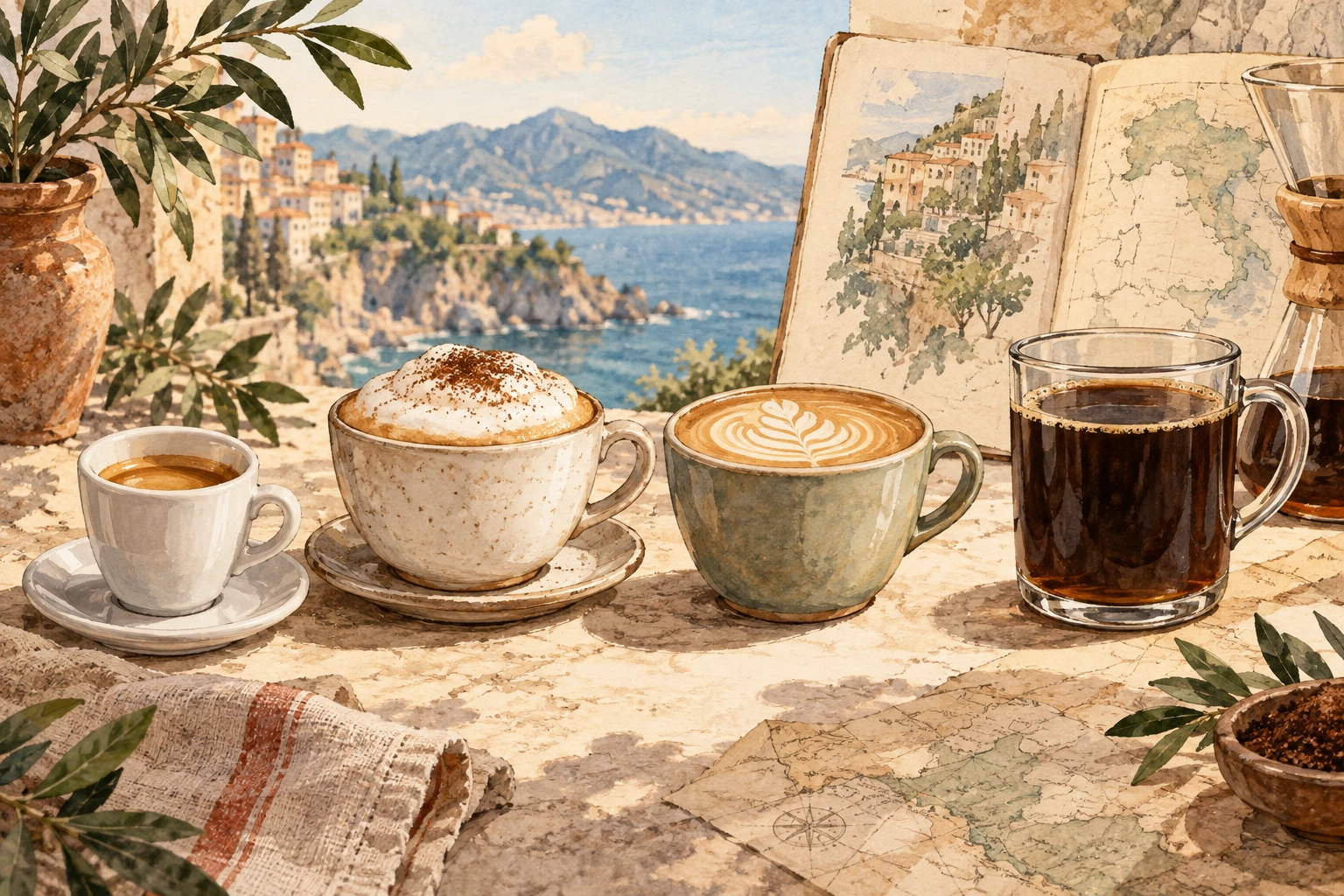
Next layerWe will add natural and washed processing, water and minerals, grinding, extraction, origins and sensory tasting—the links that explain why two cups from one variety can taste entirely different.
01
What is actually in the cup
Coffee drinks
01Espresso
A concentrated coffee brewed under pressure.
+
Espresso
A concentrated coffee brewed under pressure.
Usually 25–40 g in the cup from roughly 18–20 g of ground coffee. Sweetness, acidity and bitterness should feel balanced—not simply strong.
USEFUL NOTEDrink it soon after serving and judge texture as well as flavor.
02Ristretto
A shorter, more concentrated espresso.
+
Ristretto
A shorter, more concentrated espresso.
Uses a smaller beverage yield than espresso. It often feels denser and sweeter, though the exact recipe varies by café.
USEFUL NOTEAsk about the café's recipe; ristretto is a ratio, not a fixed cup size.
03Americano
Espresso diluted with hot water.
+
Americano
Espresso diluted with hot water.
Keeps the espresso's character while lowering its concentration. It is not identical to filter coffee, which extracts differently.
USEFUL NOTEFor more aroma, add water first and espresso second.
04Cappuccino
Espresso, steamed milk and a fine foam layer.
+
Cappuccino
Espresso, steamed milk and a fine foam layer.
A balanced milk drink, commonly around 150–180 ml. Modern specialty versions use silky microfoam rather than a stiff cap.
USEFUL NOTEThe milk should taste naturally sweet, never scorched.
05Flat white
A compact milk drink with a stronger coffee presence.
+
Flat white
A compact milk drink with a stronger coffee presence.
Usually built on a double espresso with a thin, integrated layer of microfoam. Definitions differ between Australia, New Zealand and cafés worldwide.
USEFUL NOTEChoose it when you want milk texture without losing espresso intensity.
06Cortado
Espresso softened by a small amount of warm milk.
+
Cortado
Espresso softened by a small amount of warm milk.
Traditionally close to equal parts espresso and milk, with very little foam. The name comes from the idea of 'cutting' the coffee.
USEFUL NOTEA good bridge between straight espresso and a full milk drink.
07Filter coffee
Gravity-brewed coffee with clarity and aroma.
+
Filter coffee
Gravity-brewed coffee with clarity and aroma.
Water passes through a bed of coffee and a paper or metal filter. It usually reveals origin character more clearly than milk drinks.
USEFUL NOTELet it cool slightly; delicate flavors often become clearer.
08Cold brew
Coffee extracted cold over many hours.
+
Cold brew
Coffee extracted cold over many hours.
Long, cool extraction creates a smooth, concentrated drink with low perceived sharpness. It differs from iced coffee, which is brewed hot and chilled.
USEFUL NOTECheck whether it is served as a concentrate or ready to drink.
02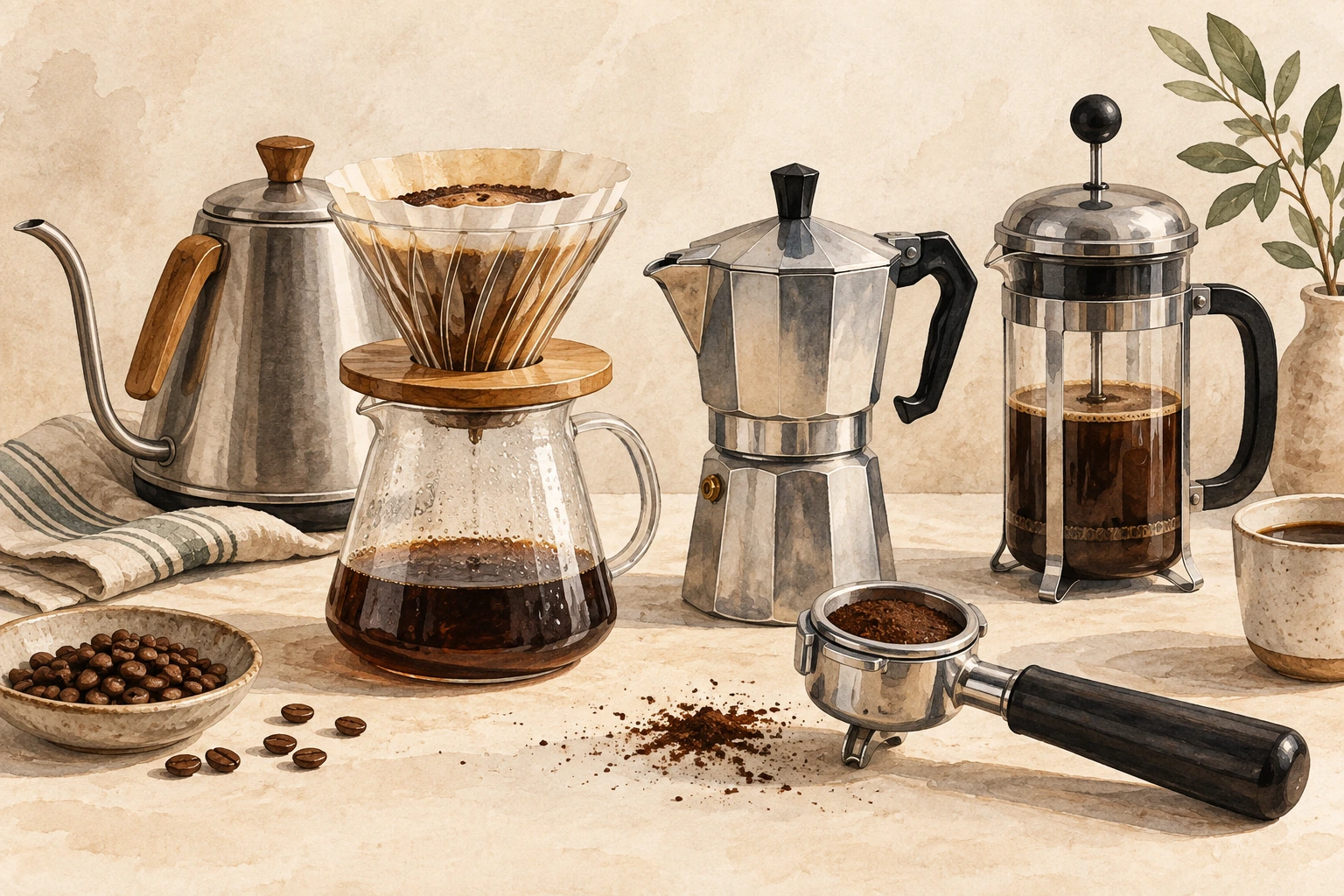
How water meets coffee
Brewing methods
01Espresso machine
Pressure, fine grind and a short brew time.
+
Espresso machine
Pressure, fine grind and a short brew time.
Hot water is pushed through a compact coffee puck. Dose, yield, time, temperature and puck preparation all shape the result.
USEFUL NOTEA scale is more reliable than judging by volume alone.
02V60
A conical pour-over known for clarity.
+
V60
A conical pour-over known for clarity.
Its large opening and spiral ribs give the brewer direct control over flow. Technique and grind consistency matter greatly.
USEFUL NOTEStart near 60 g coffee per liter of water and adjust to taste.
03Chemex
Pour-over through a thick paper filter.
+
Chemex
Pour-over through a thick paper filter.
The thick filter removes more oils and fine particles, producing a clean, tea-like cup suited to larger batches.
USEFUL NOTERinse the filter thoroughly to remove paper flavor and warm the vessel.
04AeroPress
Immersion and gentle pressure in one brewer.
+
AeroPress
Immersion and gentle pressure in one brewer.
Compact and forgiving, with recipes ranging from espresso-like concentrates to clear filter-style cups.
USEFUL NOTEIt is excellent for travel because it is light, durable and flexible.
05French press
Full-immersion brewing with a metal screen.
+
French press
Full-immersion brewing with a metal screen.
Coffee and water steep together before the plunger separates the grounds. The cup is usually rich in body and oils.
USEFUL NOTEPour gently after pressing and do not leave the drink sitting on the grounds.
06Moka pot
Stovetop pressure brewing, intense but not espresso.
+
Moka pot
Stovetop pressure brewing, intense but not espresso.
Steam pressure pushes hot water through coffee into the upper chamber. Its pressure is much lower than an espresso machine's.
USEFUL NOTEUse moderate heat and stop before aggressive bubbling to avoid harshness.
07Ibrik / cezve
Very fine coffee brewed unfiltered in a small pot.
+
Ibrik / cezve
Very fine coffee brewed unfiltered in a small pot.
A traditional method across the Middle East, Balkans and beyond. The grounds settle in the cup, creating dense body and aroma.
USEFUL NOTEHeat slowly and avoid a violent boil.
03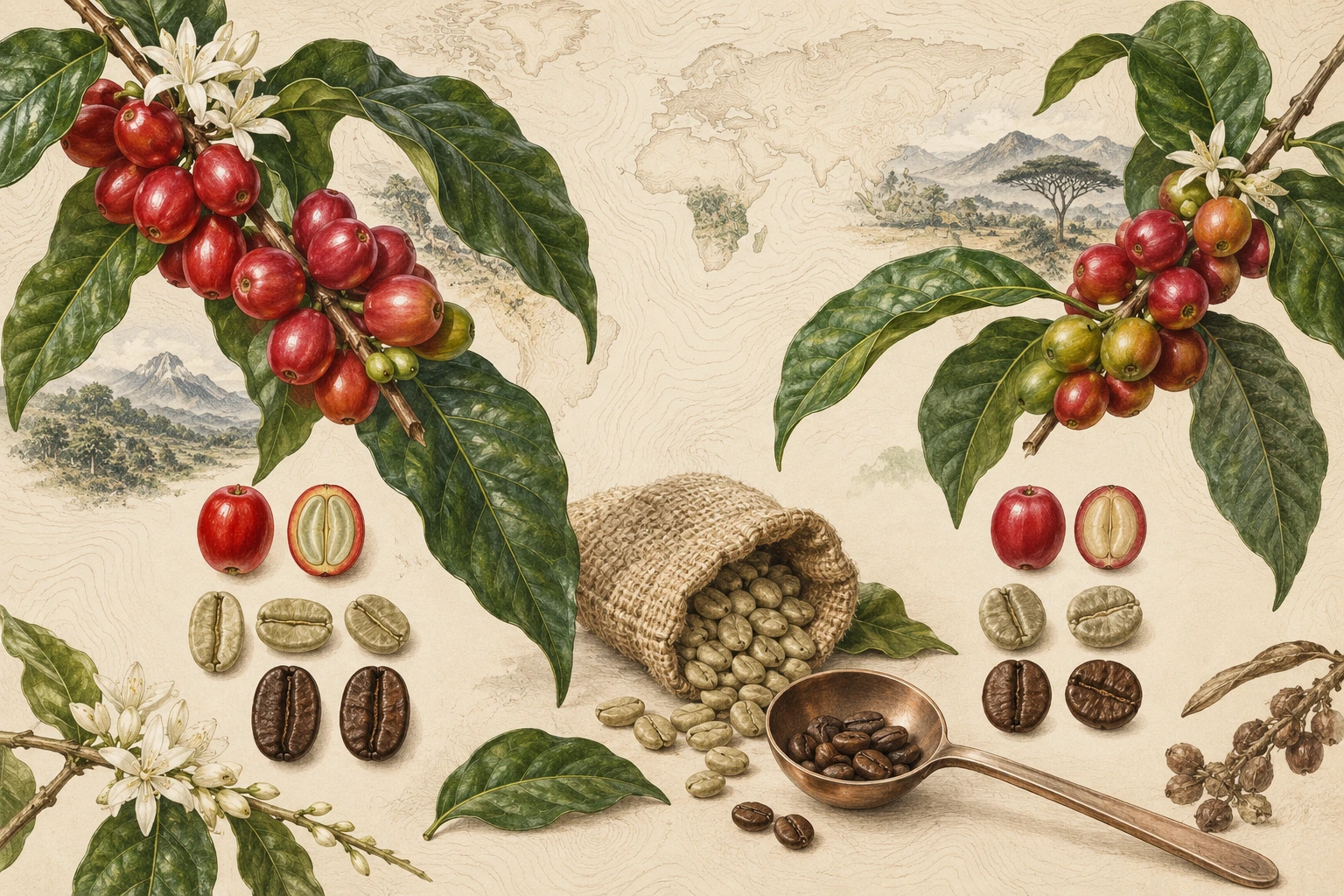
The plant before the roast
Beans & varieties
01Arabica
The dominant specialty-coffee species.
+
Arabica
The dominant specialty-coffee species.
Coffea arabica is genetically diverse and sensitive to climate. Quality varies enormously by variety, terroir, processing and roasting.
USEFUL NOTE'100% Arabica' is not a quality guarantee by itself.
02Robusta / canephora
A resilient species with more caffeine and body.
+
Robusta / canephora
A resilient species with more caffeine and body.
Coffea canephora generally grows warmer and lower than Arabica. Fine robusta can be sweet and complex, while commodity lots often taste harsher.
USEFUL NOTEJudge the producer and lot, not the species name alone.
03Bourbon
A classic Arabica variety known for sweetness.
+
Bourbon
A classic Arabica variety known for sweetness.
An influential variety with many descendants. It can produce excellent quality but is relatively low-yielding and disease-susceptible.
USEFUL NOTELook for country, farm and process alongside the variety.
04Gesha
An aromatic variety associated with floral cups.
+
Gesha
An aromatic variety associated with floral cups.
Made famous in Panama but traced to Ethiopia, Gesha can show jasmine, citrus and tea-like character when grown and processed well.
USEFUL NOTEThe name raises price, but origin and cup quality still matter.
04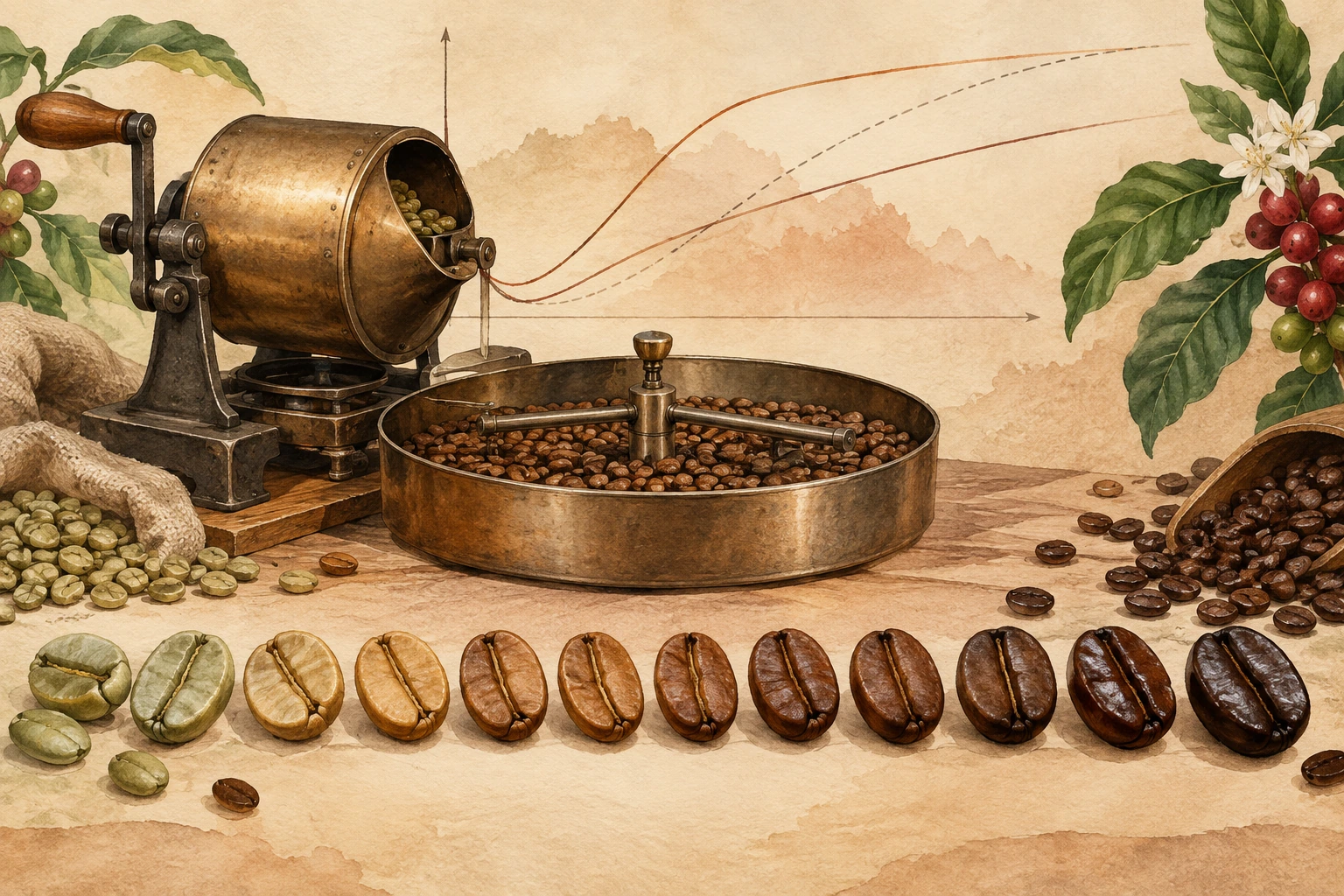
Heat changes the bean
Roast levels
01Light roast
Origin-led, aromatic and often more acidic.
+
Light roast
Origin-led, aromatic and often more acidic.
A lighter development preserves more of the coffee's intrinsic fruit, floral and terroir character. It is not the same as weak coffee.
USEFUL NOTEOften benefits from slightly hotter water and a finer grind in filter brewing.
02Medium roast
A balance of origin character and roast sweetness.
+
Medium roast
A balance of origin character and roast sweetness.
Often combines fruit or nut notes with caramelized sweetness and moderate body. The category has no universal color standard.
USEFUL NOTEA versatile starting point for espresso and filter.
03Medium-dark roast
More body and roast character, less delicate acidity.
+
Medium-dark roast
More body and roast character, less delicate acidity.
Chocolate, caramel and spice notes become dominant while some origin nuance remains.
USEFUL NOTEWorks well for people who want intensity without a charred finish.
04Dark roast
Roast-led, smoky and low in perceived acidity.
+
Dark roast
Roast-led, smoky and low in perceived acidity.
Longer roasting pushes oils toward the surface and makes the roast process dominate over origin character.
USEFUL NOTEUse slightly cooler water to reduce harsh bitterness.
05Espresso roast
A roasting intention, not one fixed darkness.
+
Espresso roast
A roasting intention, not one fixed darkness.
The roaster develops a coffee for pressure extraction and balance. Modern espresso roasts may be light, medium or dark.
USEFUL NOTERead the roaster's brew recommendation instead of judging color alone.